FinOps is a methodology that combines financial management practices with cloud operations to optimize cloud spending and align it with business objectives.
At its essence, FinOps embodies a cultural ethos wherein teams collectively manage cloud expenditures, fostering individual accountability for cloud usage while guided by a central repository of best practices. Collaboration among cross-functional units such as Engineering, Finance, and Product drives accelerated product delivery alongside enhanced financial oversight and predictability.
Derived from blending “Finance” and “DevOps”, FinOps emphasizes the synergy and communication between business and engineering teams.
Alternate names for this practice include “Cloud Financial Management”, “Cloud Financial Engineering”, “Cloud Cost Management”, “Cloud Optimization” or “Cloud Financial Optimization.”
Occasionally mislabeled as “Cloud Financial Operations”, this term is losing favor due to its potential confusion with the conventional role of “Financial Operations” within Finance departments.
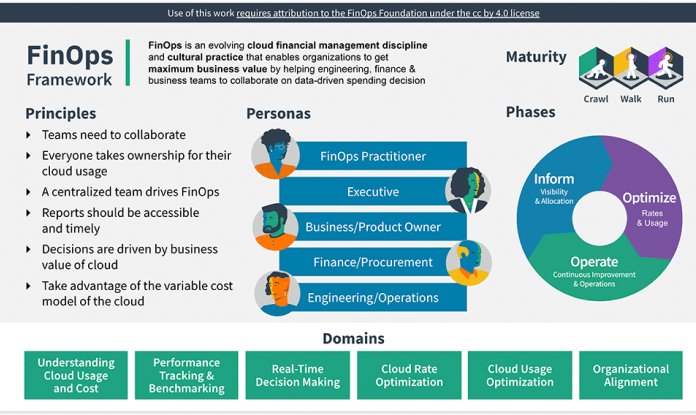
FinOps Framework: Cloud Spends with Accountability
Irrespective of its label, FinOps entails instigating a cultural shift towards financial responsibility within the flexible spending framework of cloud services. It empowers decentralized engineering and business units to navigate trade-offs among speed, cost, and quality in their cloud infrastructure and investment strategies.
If FinOps appears solely focused on cost savings, it warrants reconsideration. Its essence lies in optimizing cloud resources to foster efficient growth.
Cloud expenditure can catalyze increased revenue, signify expansion of the customer base, facilitate quicker product releases, or even streamline data center shutdowns. FinOps prioritizes the removal of obstacles, empowering engineering teams to expedite feature development, application deployment, and migrations. It encourages cross-functional discussions regarding investment priorities. While decisions may sometimes favor cost reduction and at other times necessitate increased investment, teams are now equipped with a rationale behind their choices.